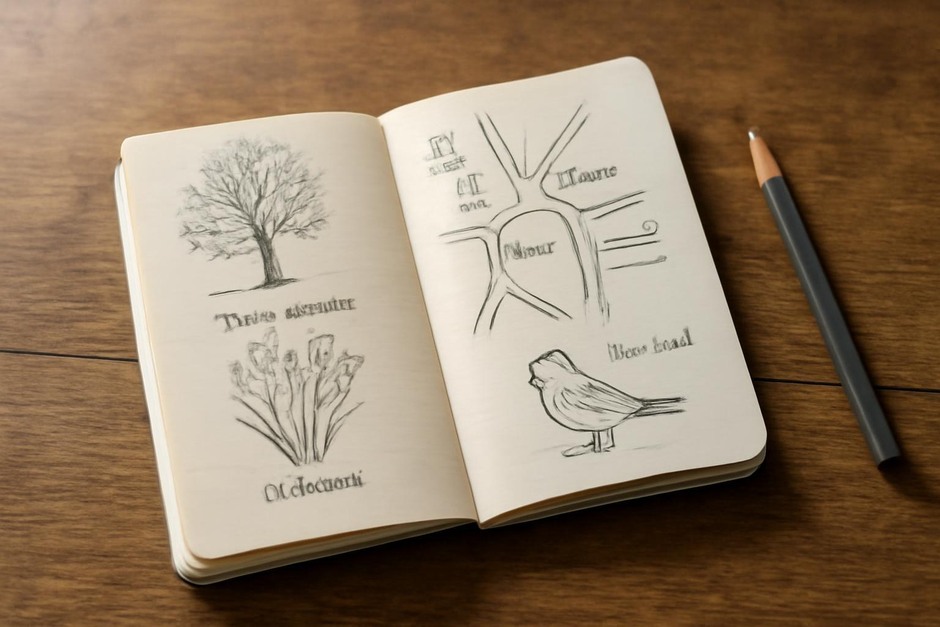
Assembling a Portable Field Kit for Slow Notes: Step-by-Step Materials and Methods
Why a compact field kit matters
Keeping a small, consistent set of tools helps the act of noticing feel lighter. The following method balances durability, portability, and ease of use while explaining the trade-offs between common materials and approaches. There is no single “best” kit — this is a pragmatic, neutral comparison so you can match choices to how you like to observe.
Step-by-step method: assemble and use a portable kit
-
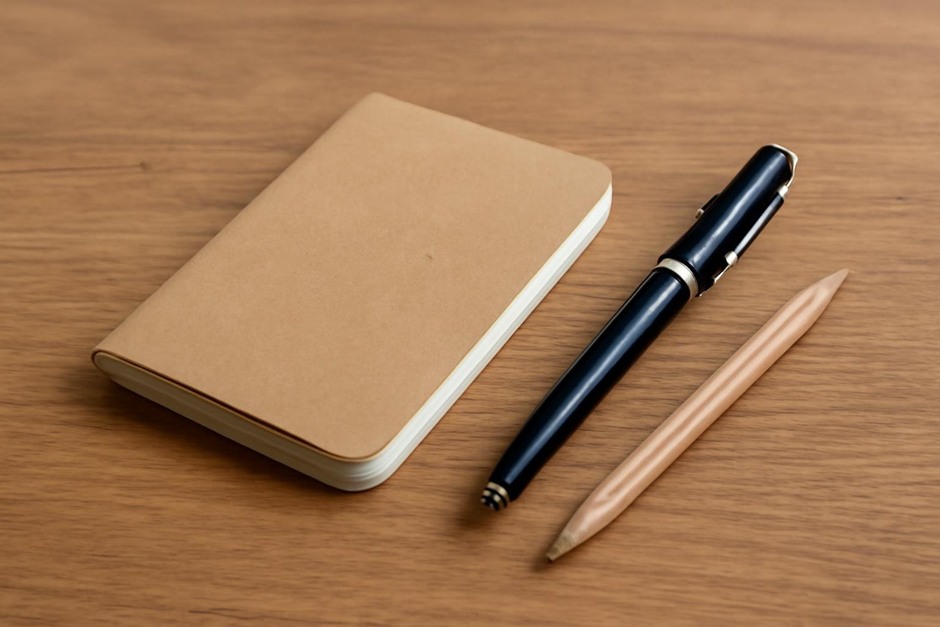
Choose your notebook.
Pick one size and format to make the habit automatic. Options to consider:
- Passport or pocket (3.5–4.5″ tall): very portable, limits long entries or large sketches.
- A6 or A5 softcover: more room for sketches, still pocketable in a bag.
- Staple-bound or stitch-bound: lies flat less well than spiral, but simpler and lighter.
- Paper weight: 70–160 gsm. Lower weight keeps weight and cost down; higher weight handles wetter media and ink better.
-
Select writing implements.
Decide between pens and pencils based on permanence and handling:
- Mechanical pencil: erasable, no drying concerns, good for quick sketches, but smudges; minimal maintenance.
- Ballpoint pen: reliable in all conditions, low bleed-through, less expressive line quality.
- Fountain or rollerball: smoother line, variable ink behavior; requires attention to caps and can bleed on thin paper.
-
Add a small protective case.
A simple zip pouch or elastic wrap keeps tools together. Trade-offs:
- Hard case: better protection, bulkier.
- Soft pouch: lighter and compressible, offers less water resistance.
-
Include one or two extras.
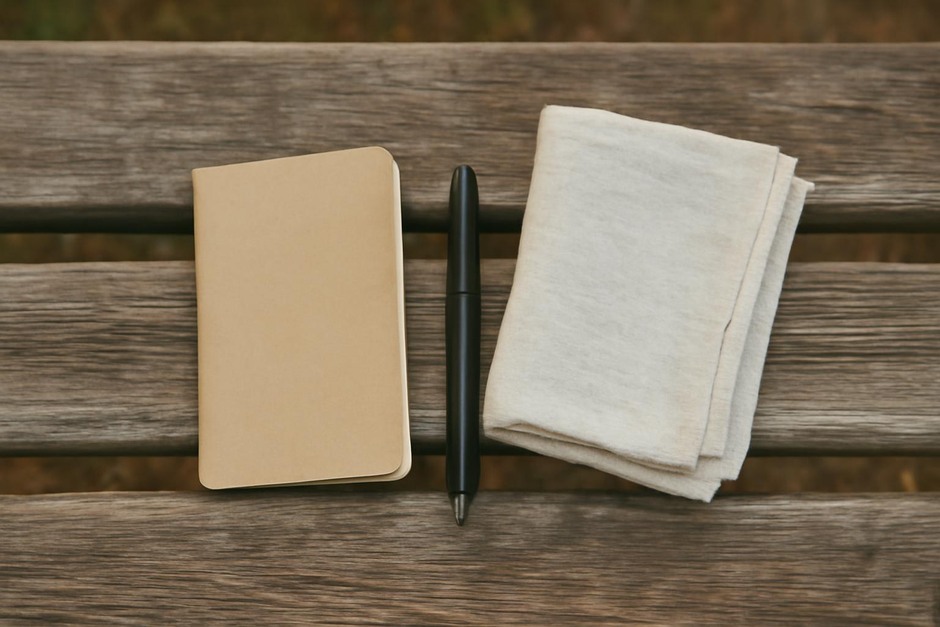
Choose based on what you notice most: a tiny water brush for color washes, a compact ruler for measurements, a folded cloth for damp weather, or a sticky label pad for tagging pages. Fewer extras keep weight down; more extras increase flexibility.
-
Develop a short ritual.
Before you leave home or when you sit down: open to a fresh page, jot the date/time and one line about where you are, then make a single observation (a phrase, quick sketch, or list). Consistency matters more than length.
-
Store and archive intentionally.
At the end of the week or month, tuck completed books into a box or drawer. Simpler storage reduces decision fatigue later.
Materials trade-offs at a glance
- Size vs. expressiveness: Smaller notebooks are carried more often; larger ones invite longer entries and bigger sketches.
- Paper weight vs. portability: Heavier paper accepts wet media but adds bulk and cost.
- Pens vs. pencils: Pens are immediate and permanent; pencils are forgiving and low-maintenance.
- Cases vs. minimal carry: A case organizes but increases bulk; no case means you must refasten pens and protect the notebook another way.
Variations
- Rain-ready kit: Choose a small plastic pouch, water-resistant notebook (or a waterproof field notebook) and ballpoint pen. Trade-off: less paper texture and heavier materials.
- Sketch-first kit: A slightly larger A5 hardcover, 140–200 gsm paper, a mechanical pencil, and a compact watercolor half-pan. Trade-off: heavier but allows richer visual notes.
- Ultralight kit: Tiny 48-page staple notebook and one multi-tool pen. Trade-off: limits length and media options but maximizes carry frequency.
- Urban observation kit: Small notebook, fine-liner pen, small ruler, and a sticky label pad for addressing found details. Trade-off: more items to manage in crowded pockets.
Troubleshooting
- Ink bleed or feathering: Use a heavier paper or switch to a ballpoint. If you like fountain pens, test pens and paper combinations at home before committing.
- Smudging: Try fast-drying inks, use a pencil for shaded areas, or carry a thin blotter sheet between pages.
- Cap lost or pen dried out: Keep a cheap backup pen in the case; for fountain pens, a small cartridge or converter may be worth carrying depending on use.
- Notebook bulk grows: If the book becomes too full, start a new volume and keep an index or note of where topics continue.
- Weather damage: A folded cloth or lightweight plastic bag solves most damp-day issues; consider water-resistant covers for frequent wet-weather use.
- Decision fatigue about what to record: Use a short prompt list (time, place, one sensory note, one question) to reduce choices and maintain momentum.
As with most slow practices, the value of a field kit comes from using it regularly rather than optimizing every component. The method above gives a simple pathway: choose one notebook, one primary writing tool, one small protection solution, and a tiny ritual to begin. Over time you will notice which trade-offs you prefer and can adjust the kit accordingly.